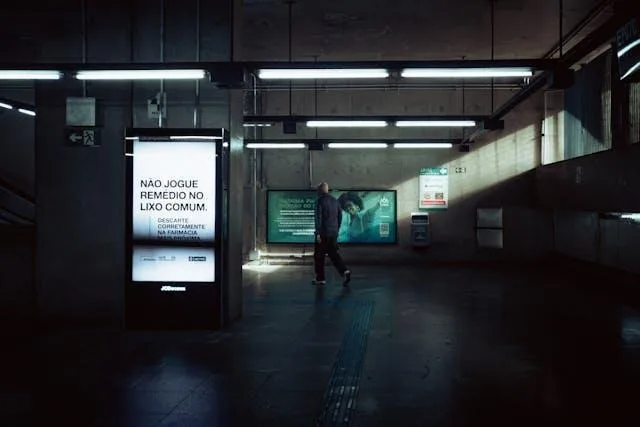
Why Traditional Advertising Screens No Longer Capture Attention
I counted 23 screens during a layover at O’Hare last year. Twenty-three. And I can’t tell you what a single one of them said. Not the airline ad near gate B7, not the insurance promo by the food court. Nothing stuck.
That’s the reality for every business still banking on traditional advertising displays. The hardware hasn’t evolved much since flat panels got cheap around 2010, but the people walking past those screens? Completely different species. We scroll through 300 feet of content on our phones before breakfast. A rotating JPEG on a lobby TV doesn’t register anymore. It’s furniture.
Your Audience Learned to Look Away
Nobody decides to ignore your screen. The brain just does it on autopilot. Microsoft’s research team pegged the average attention span at roughly eight seconds back in 2015, and I’d bet my lunch it’s dropped since then.
Here’s the ugly math. Most traditional screens cycle through a loop every 10 to 15 seconds. A person walking by at normal speed catches maybe two seconds of one slide. Two seconds they didn’t ask for, showing something they didn’t choose. Why would that stick?
And it gets worse. The more familiar a screen becomes in someone’s daily routine, the faster their brain categorizes it as noise. Your office lobby display? The regulars stopped seeing it after week two. I’ve watched it happen in three different buildings I’ve worked in.
Phones Win Every Time
Go sit in a dentist’s waiting room for ten minutes and watch what happens. There’s a TV on the wall playing some loop of health tips and local ads. Every single person in those chairs is staring at their phone instead.
Makes sense, right? Your phone knows what you care about. It serves you videos you’ll actually watch, articles you’ll actually read. A mounted screen blasting the same promo to a room full of strangers can’t compete with that. It’s like bringing a megaphone to a conversation.
The gap only grows wider each year. Apps get smarter about your preferences. Screens on walls stay dumb.
Going Bigger Is Just Expensive Failure
I’ve sat in meetings where someone genuinely said, “What if we just get a bigger screen?” As if square footage solves a relevance problem.
A 90-inch display running dull content is still dull content. You spent more, sure. But did anyone look? Did anyone care? Probably not. Throwing hardware at a strategy problem is like buying a louder horn for a car nobody wants to ride in.
The real question isn’t how big the screen should be. It’s whether the screen can show something that matters to the person standing in front of it at that exact moment. Can it adjust to the time of day? React to how busy the space is? If your answer is no, you’re just burning budget on a prettier version of the same mistake.
Smarter Screens Need Smarter Brains Behind Them
This is where things actually get interesting. The shift isn’t about fancier hardware. It’s about software that makes displays behave like communication tools instead of digital posters.
Think of it this way. A restaurant menu board that switches from breakfast items to lunch specials at 11 AM without anyone touching it. A hotel lobby screen that shows check-in instructions in the morning and event schedules in the evening. That’s not magic. That’s content management done right.
Platforms offering digital Signage Solutions for Video Walls & Displays let teams control what plays on dozens or hundreds of screens from a single dashboard. I’ve seen a retail chain push a flash sale to 40 stores in under five minutes using this kind of setup. Push a weather-triggered promo to the front entrance at 8 AM, swap it for a happy hour graphic by 4 PM. Night and day difference for the viewer.
What People Actually Stop and Watch
So what does grab attention when everything else gets tuned out? I’ve noticed a pattern across different spaces and industries:
- Screens that react when someone walks up to them
- Live data feeds, things like social posts, scores, or breaking news
- Touchscreens where people can browse a menu or a directory themselves
- Content that shifts based on the hour, morning messages versus evening vibes
- Customer photos or reviews cycling on a display near the entrance
See the thread? Every single one of those responds to something real. The person, the clock, the crowd. A static slide responds to nothing. That’s why your eyes skip it.
Start Measuring or Keep Guessing
Old-school screens gave you zero feedback. You loaded a USB stick, hit play, and hoped for the best. Maybe someone mentioned the screen at a meeting six months later. That was your “data.”
Now? Modern systems track how many people paused in front of a display, how long they looked, and whether they interacted. One hotel I spoke with found that swapping a generic welcome screen for a rotating local attractions feed increased lobby dwell time by nearly 30%. They wouldn’t have known that without the analytics.
Honestly, most teams never bother measuring. They set up their screens, walk away, and wonder a year later why nobody mentions the signage. If you’re not tracking what works, you’re just decorating.
Screens Aren’t Dead, Bad Strategy Is
Your displays can still pull their weight. But only if you stop treating them like set-it-and-forget-it billboards. Audiences moved on. Attention got scarce. The businesses figuring this out fastest are treating their screens like living channels, not electronic picture frames.
Frequently Asked Questions
Why do people ignore traditional advertising screens?
Blame repetition and irrelevance. When a screen plays the same loop all day, your brain tags it as background clutter after a few exposures. Phones offer personalized, chosen content, so the mounted screen loses by default. It’s the same reason you stop noticing a poster after it’s been on your wall for a month.
What makes digital signage different from just putting a TV on a wall?
A TV on a wall plays a file. Digital signage runs on software that schedules, swaps, and targets content remotely. You can manage a hundred screens from your laptop and change what each one shows based on time, location, or audience. Totally different animal.
Which businesses get the most out of smart displays?
Anywhere with foot traffic and time-sensitive messaging. Restaurants updating menus, hospitals posting wait times, retailers pushing daily deals, hotels welcoming guests by name at check-in. If your audience moves through a physical space, responsive screens give you a real edge.
Does upgrading from static screens cost a fortune?
Not necessarily. If you’ve already got screens mounted, the big spend is the software platform and the effort behind creating content worth showing. Most businesses recoup that quickly because dynamic content actually gets noticed, which is the whole point of having screens in the first place.
How do I know if my digital signage is actually working?
Look at dwell time, interaction rates, and any conversion tied to what’s on screen. Good platforms give you a dashboard with real numbers. If you ran a promo on screen and nobody redeemed it, you know the content needs work. That feedback loop didn’t exist five years ago.