10 Traditional Wedding Attire Ideas from Around the World
A Traditional Wedding Attire is one of the most magical celebrations in life, and one of the most memorable parts is the attire. From colorful saris in India to elegant hanboks in Korea, every culture carries its own charm through traditional wedding outfits.
These garments are more than just clothes—they tell stories of heritage, love, and unity. If you’ve ever been curious about the beauty of cultural wedding wear, you’re in the right place. Let’s dive into a collection of fascinating and unique traditional wedding attire ideas that span across countries and traditions.
Best Traditional Wedding Attire Styles
Below you’ll find 10 creative and beautiful types of traditional wedding attire, each with its own history, meaning, and charm.
1. Indian Bridal Sari
The Indian bridal sari is a stunning silk or embroidered fabric draped with elegance. Usually in shades of red or gold, it symbolizes prosperity and love. Brides pair it with intricate jewelry, bangles, and henna designs on their hands and feet.
The sari varies by region—Kanjeevaram silks in South India, Banarasi saris in North India, and Patola weaves in Gujarat. Each version tells a story of heritage while highlighting the bride’s grace and beauty.

2. Japanese Shiromuku Kimono
In Japan, brides often wear the shiromuku, a white silk kimono representing purity and new beginnings. The attire is layered, often with an outer robe and an ornate headpiece called the tsunokakushi.
This headpiece symbolizes humility and suppresses selfishness. The ensemble is traditional yet deeply symbolic, creating a serene and graceful bridal look. Sometimes brides change into a colorful kimono called iro-uchikake for the reception, showcasing vibrant patterns and joy.

3. Korean Hanbok
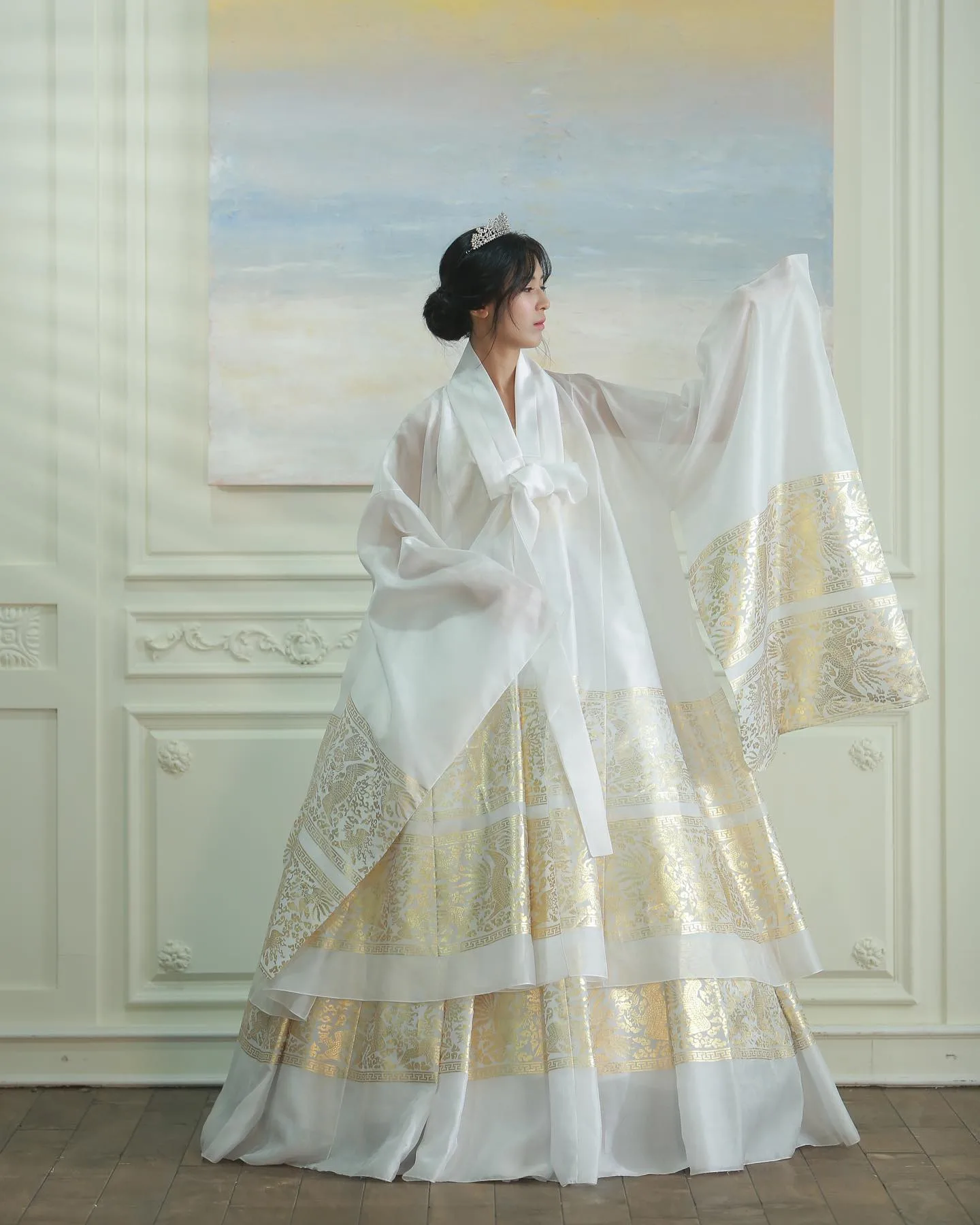
The Korean hanbok is a colorful and structured wedding outfit that blends tradition with elegance. Brides wear a vibrant jeogori (jacket) with a long chima (skirt). Grooms wear a matching robe, often with headpieces or accessories that signify status.
The attire symbolizes balance, harmony, and happiness. While modern weddings may adapt lighter fabrics, the hanbok’s structured yet flowing silhouette ensures the couple looks regal and timeless on their big day.

4. Chinese Qipao or Cheongsam
Chinese brides often wear a qipao or cheongsam in bold red with intricate gold embroidery, representing luck, happiness, and wealth. Some brides choose a two-piece outfit called the kua, richly adorned with dragon and phoenix patterns symbolizing marital harmony.
The fitted silhouette of the qipao flatters the figure while highlighting tradition. In northern China, the attire often comes with elaborate headdresses and embroidered shoes, adding elegance and cultural pride to the celebration.

5. Nigerian Yoruba Aso Oke
In Yoruba weddings, brides wear Aso Oke, a handwoven fabric that shines with rich colors and patterns. The outfit typically includes a wrapper skirt (iro), blouse (buba), and head tie (gele). Grooms match in tunics with trousers and caps.
The attire is often customized to the couple’s chosen colors, making each wedding unique. The gele, intricately tied, is a statement piece that symbolizes elegance, confidence, and cultural pride.

6. Ghanaian Kente Cloth
Ghanaian couples often choose kente cloth, a handwoven fabric with symbolic colors and patterns. Each pattern tells a story of heritage, unity, or blessings. Brides wrap the fabric into a gown while grooms wear it as a draped cloth or tunic.
The vibrant hues of gold, green, and red create a bold and joyful look. Kente cloth elevates the wedding ceremony with its historic significance, linking modern couples to their ancestors with pride.

7. Moroccan Kaftan
In Morocco, brides wear an embroidered kaftan or takchita, layered with ornate fabrics. These gowns are embellished with sequins, beads, and gold threads. The attire highlights luxury and elegance, often accompanied by a beautiful belt (mdamma) to cinch the waist.
Brides usually wear multiple kaftans during the wedding celebration, symbolizing different stages of life. This tradition showcases not only beauty but also the rich cultural artistry of Moroccan craftsmanship.

8. Pakistani Lehenga Choli
Pakistani brides typically wear a lehenga choli—a flowing skirt paired with a blouse and dupatta (veil). Usually crafted in deep reds, greens, or maroons, the outfit is heavily embroidered with gold threads and stones. Grooms wear sherwanis to match, creating a harmonious look.
Bridal jewelry, including nose rings and tikka headpieces, completes the ensemble. The lehenga is a symbol of cultural pride, reflecting centuries of South Asian wedding traditions and elegance.

9. Scottish Kilt Outfit
In Scotland, grooms proudly wear kilts made from their family tartan. The outfit often includes a sporran (a pouch), jacket, and knee-high socks with flashes. Brides wear elegant gowns but may also incorporate tartan sashes or shawls to honor family heritage.
The kilt isn’t just clothing—it’s a display of clan identity and history. Scottish weddings become even more vibrant with bagpipes, creating a truly traditional and festive atmosphere.

10. Filipino Barong Tagalog and Filipiniana Dress
In the Philippines, grooms often wear the Barong Tagalog, a lightweight embroidered shirt made from pineapple or banana fibers. Brides wear a Filipiniana dress, featuring butterfly sleeves and elegant embroidery.
The attire is designed for tropical climates, blending comfort with sophistication. Couples may also add cultural touches like traditional jewelry or fans.

Traditional wedding attire is more than fashion. It’s a reflection of culture, heritage, and love. Each outfit tells a story of identity and unity. Whether you admire vibrant colors or timeless elegance, these attires show how weddings beautifully blend tradition and celebration.