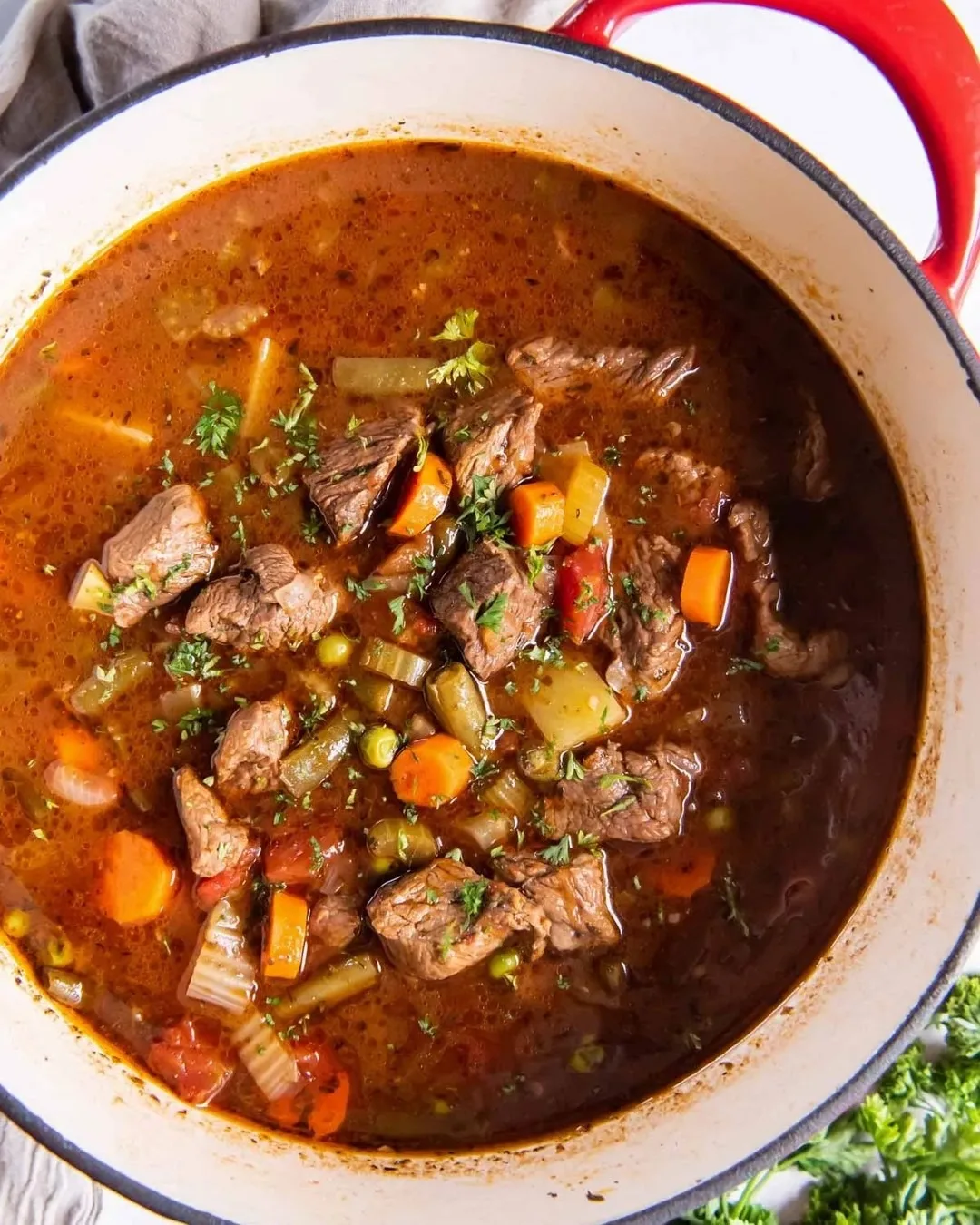
Old Fashioned Vegetable Beef Soup
There is something truly magical about a pot of soup simmering on the stove all afternoon, filling the house with savory warmth.
I recently made this Old Fashioned Vegetable Beef Soup on a chilly weekend, and it instantly took me back to my grandmother’s kitchen where comfort food was always on the menu.
The rich beef broth combined with tender chunks of meat creates a meal that feels like a hug in a bowl. It’s the perfect way to use up those extra root vegetables sitting in your pantry while feeding the whole family something nutritious.
Trust me, once you smell the onions and beef searing, you’ll know you’re in for a treat that tastes even better than it smells.
Ingredients
- 1 lb Beef Stew Meat: Cut this into bite-sized cubes for even cooking; look for chuck roast for the best tenderness.
- 1 Onion: A yellow or white onion works best here to build a savory flavor base.
- 3 Celery Ribs: Chopped into pieces; don’t skip the leaves if you have them, as they add extra aroma.
- 10 Baby Carrots (or 2 regular carrots): Slice these into coins for a classic soup texture.
- 2 Potatoes: Russet or Yukon Gold work well; peel them if you prefer a smoother texture, or leave the skins on for a rustic feel.
- 1 cup Frozen Corn: Sweet corn adds a nice pop of color and slight sweetness to balance the savory broth.
- 1 cup Frozen Peas: Add these last so they stay bright green and don’t turn into mush.
- 2 (14-ounce) cans Diced Tomatoes: I prefer salt-free so I can control the sodium levels myself.
- 3 ½ cups Beef Broth: Use a high-quality broth or stock; this is the foundation of your soup’s flavor.
- 2 small Bay Leaves: Dried bay leaves add a subtle depth that makes the soup taste slow-cooked.
- 2 teaspoons Garlic Powder: You can also use fresh minced garlic, but powder distributes evenly throughout the broth.
- 2 tablespoons Olive Oil: Divided use; you need this for searing the meat and sautéing the veggies.
- 4 cups Water: Helps stretch the soup without making it too heavy.
- 2 teaspoons Hot Pepper Sauce: Adds a tiny kick of acidity and heat without making the soup spicy.
Note: This recipe yields approximately 4-6 servings.
Variations
- Dairy-Free: This recipe is naturally dairy-free, but ensure you serve it with oil-based crackers instead of buttered bread if strict adherence is needed.
- Vegetable Boost: Feel free to toss in green beans, chopped zucchini, or even shredded cabbage if you want to pack more nutrients into every bowl.
- Grain Addition: To make it even heartier, you can add half a cup of barley or small pasta shells, though you may need to add an extra cup of broth as the grains will absorb liquid.
- Low Sodium: Swap the beef broth for a low-sodium version and omit the added salt in the tomatoes to make this heart-healthy.
Cooking Time
- Prep Time: 20 minutes
- Cooking Time: 1 hour 40 minutes
- Total Time: 2 hours
Equipment
- Large Dutch Oven or Stockpot: Essential for holding all the liquid and veggies comfortably.
- Sharp Chef’s Knife: For chopping the beef and vegetables safely and efficiently.
- Cutting Board: A sturdy surface to prep your mirepoix (onions, carrots, celery).
- Wooden Spoon: Perfect for scraping up the flavorful browned bits from the bottom of the pot.
- Measuring Cups and Spoons: To ensure your liquid-to-solid ratio is perfect.
How to Make Old-Fashioned Vegetable Beef Soup?

Preparing the Meat
Start by taking your beef stew meat and cutting it down into small, uniform bite-sized pieces, roughly half an inch thick. Heat one tablespoon of olive oil in your large pot or Dutch oven over medium-high heat until it shimmers. Add the beef pieces in a single layer—you may need to do this in batches—and sear them until they are browned on all sides. This browning process, known as the Maillard reaction, creates a deep, rich flavor foundation that boiling alone cannot achieve. Once the beef is nicely browned, remove it from the pot and set it aside on a plate to rest.
Sautéing the Aromatics
With the beef set aside, add the remaining tablespoon of olive oil to the same pot, keeping the heat on medium. Toss in your chopped onions and celery, stirring them around to coat them in the oil and beef drippings left in the pan. Sauté these vegetables for about ten minutes, or until the onions turn translucent and start to become golden. This step softens the harshness of the raw onion and builds a sweet, savory base for the broth that will carry the flavor of the entire soup.
Simmering the Base
Now, return the browned beef to the pot along with any juices that accumulated on the plate. Pour in the water, beef broth, and the diced tomatoes (including their juices), followed by the carrots, potatoes, corn, bay leaves, and garlic powder. Bring the entire mixture to a rolling boil, then immediately reduce the heat to low. Let the soup simmer uncovered for about an hour; this long, slow cook allows the collagen in the beef to break down, making the meat incredibly tender while melding the flavors together.
Final Touches and Serving
After the soup has simmered for an hour and the beef is almost tender, it’s time to add the finishing touches. Stir in the frozen peas and the hot pepper sauce, which adds a subtle tang and brightness to the rich broth. Cover the pot and let it simmer for another 30 minutes until the beef is fork-tender and the vegetables are cooked through perfectly. Before serving, taste the broth and season with freshly ground black pepper or a bit more hot sauce if you like a kick.
Additional Tips for Making this Recipe Better
I always recommend searing the beef in batches rather than dumping it all in at once; overcrowding the pan steams the meat instead of browning it, and you lose out on that deep, roasted flavor.
- If you have a parmesan cheese rind sitting in your fridge, toss it in during the simmering stage—it adds an incredible savory “umami” punch that makes the broth taste restaurant-quality.
- Taste your soup often as it cooks; sometimes different brands of beef broth have different salt levels, so you might not need to add any extra salt at all.
- Don’t rush the simmering process; letting the soup bubble gently for that full hour and a half is the secret to ensuring the beef melts in your mouth rather than being chewy.
- I like to add a splash of Worcestershire sauce or a teaspoon of tomato paste during the sautéing step for an even deeper, beefier color and flavor profile.
How to Serve Old-Fashioned Vegetable Beef Soup?
This soup is a complete meal on its own, but presentation makes it feel special. Ladle it into deep, wide bowls and garnish with fresh chopped parsley or thyme for a burst of color. It pairs beautifully with a slice of crusty sourdough bread or warm cornbread for dipping into the broth. For a nostalgic touch, serve it with a side of saltine crackers or oyster crackers to crumble on top for added crunch.

Nutritional Information
- Calories: Approximately 300 kcal
- Protein: 25g
- Carbohydrates: 28g
- Fat: 10g
Make Ahead and Storage
Refrigerator Storage
This soup actually tastes better the next day as the flavors have more time to marry together. Store leftovers in an airtight container in the refrigerator for up to 3-4 days. To serve, simply ladle the desired amount into a bowl and microwave, or warm it gently on the stovetop.
Freezing Instructions
This is an excellent freezer meal; let the soup cool completely before transferring it to freezer-safe bags or containers. It will keep well for up to 3 months. Just be aware that the potatoes may become slightly softer upon thawing, but the flavor will remain delicious.
Reheating
Thaw frozen soup in the refrigerator overnight before reheating. Warm it in a pot over medium heat, stirring occasionally. You may need to add a splash of water or extra broth if the soup has thickened significantly during storage.
Why You’ll Love This Recipe?
- Incredible Versatility: You can easily swap out vegetables based on what is in season or what needs to be used up in your fridge.
- Simple Ingredients: Everything required for this soup is a pantry staple or easily found at any standard grocery store.
- Budget-Friendly: Using affordable cuts of stew meat and bulk vegetables makes this a cost-effective way to feed a crowd.
- Perfect for Meal Prep: Since it stores and freezes so well, you can make a big batch on Sunday and enjoy lunch all week.
- Comforting Flavor: It delivers that classic, homemade taste that feels nostalgic and satisfying on cold days.